
Decisions become reproducible when engineering requirements, models, software, measurements and production results are connected. This guide explores a practical workflow and the evidence behind each choice.
Separate standards by engineering scope
DO-178C / ED-12C addresses software considerations in airborne systems certification. DO-254 / ED-80 addresses airborne electronic hardware design assurance, relevant to complex electronic hardware such as FPGA implementations. The authorities determine applicable objectives and means of compliance for a specific program.
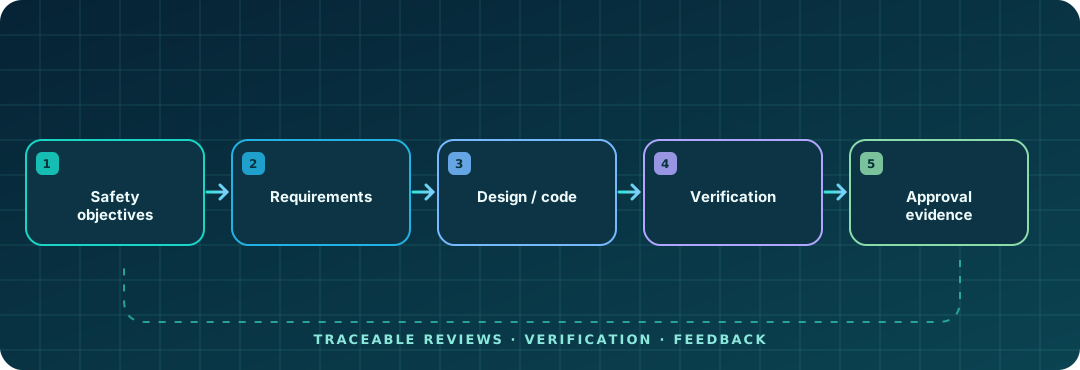
Create traceable safety and assurance plans
Identify system safety inputs, assurance levels and the relationship between requirements, architecture, hardware, software and verification. Define configuration control, change impact analysis and independence requirements as applicable.
Treat reviews and tests as evidence
Reviews, structural or functional coverage, analysis of derived requirements and verification independence are process objectives, not decoration. Record review outcomes and objective acceptance criteria, preserving tool versions and repeatable test environments.
Apply language guidelines appropriately
MISRA C:2025 is a current guideline set for C in critical systems; MISRA C++:2023 is a corresponding C++ guideline family. Static analysis findings require triage, documented deviations and tool qualification considerations where relevant. MISRA compliance by itself is not airworthiness certification.
Support qualification and environmental validation
Consider DO-160 environmental testing where applicable and product-level configuration traceability, hardware qualification, EMC and reliability evidence. Certification is a formal program-specific activity carried out with the responsible organization and competent authority.
- Engineering processes may be aligned with standards without implying a product or organization is certified.
- DO-178C is software-oriented; DO-254 covers airborne electronic hardware; MISRA supplies coding guidelines.
Further technical references
These links identify authoritative technical ecosystems for deeper reading; they are not endorsements of this article.